 Spreadsheet
How to judge a seller, an agent and a listing
Coupon reading is one skill on this site; this page is the other four. None of them need insider knowledge, just the patience to check the same few signals every time.
How to judge a seller before you order
Vetting sellers starts with tenure and volume: shop history and category experience provide context, but neither guarantees your order. Then read the recent reviews with photos, not the score, ratings and photos can both be misleading; look for consistent recent details. Check whether the seller answers questions, a clear reply helps resolve a specification but does not guarantee a later return. And weigh anomalies: a price far below every comparable listing is not a deal signal, it is an inventory-and-material question you cannot ask from the photos. The warehouse QC stage, covered in the QC guide, catches visible problems, but by its own scope rules it will not re-litigate quality, so the seller pick carries more weight than it feels like it should.
Deciding what to buy: judging the listing
Before you order, open the measurement table and ignore the size letters: across sellers, the same letter spans several centimetres, and the table is the only part that ships. Match the photo set against itself, mixed lighting and mismatched floors usually mean collected photos from different sources, so request clarification rather than assuming every image shows the same variant. For shoes, confirm which batch or version the listing currently ships if the community distinguishes them, and treat silence on that question as an answer. And read the listing's own notes fields; colour and size remarks left for the agent decide what gets bought when a link has options.
How to pick a trustworthy agent, if you are comparing
Comparing agents honestly means comparing published terms, not vibes: the fee page, the storage clock, the inspection scope, the after-sales windows, and live freight quotes for your actual destination and weight. Useful comparison evidence includes dated published terms, this operator's fee and storage pages are good examples of what a commitment looks like, and estimator quotes you can reproduce with the same parcel inputs. Red flags are the inverse: fee schedules you cannot find, storage terms that only exist in chat answers, and unexplained charges after the same parcel inputs and services are confirmed. Packing or route changes can legitimately change an estimate. We keep our own operator read on the why page, including the cases where the answer is someone else.
Other agents in the same conversation
Communities around this hobby discuss many agents, and most shoppers eventually hold accounts at more than one. The useful mental model is not a league table but a terms matrix: every agent sits somewhere on service fee versus conversion spread, storage length, inspection depth and line coverage, and the trade-offs move year to year. This site does not rank agents, rankings in this space are unverifiable by construction, see our standards for what we will print, but the comparison method above works on any of them in under an hour with their own published pages.
What makes a good spreadsheet site
You are reading one of many catalog sites, so here is the test we apply to ourselves. Choosing a good spreadsheet comes down to maintenance signals: dated pages, so you can tell when anything was last checked; working category links rather than dead ones, ours route to live category pages verified at build time; stated sources for any number that looks like a fact; and no pretend precision, a site that tells you exactly how much you will save is inventing your order to do it. Apply that list here too: every page on this site states the dates it relies on, and the update log is the audit trail.
Before you order: the five-minute checklist
Watch out for the small, boring failures that cause most losses. Confirm the size against the measurement table, not the letter. Confirm the seller still has the colourway, ask whether an unavailable variant will be cancelled or proposed as a substitution. Leave precise notes on the order for anything with options. Check your intended shipping line accepts the contents, batteries, liquids and perfume are route-restricted, as the shipping section covers. And if a coupon floor is part of your plan, verify the window is still open and your freight actually clears the floor with the checker before you count the discount as real. Ten minutes of checks against published pages beats any amount of after-sales effort.
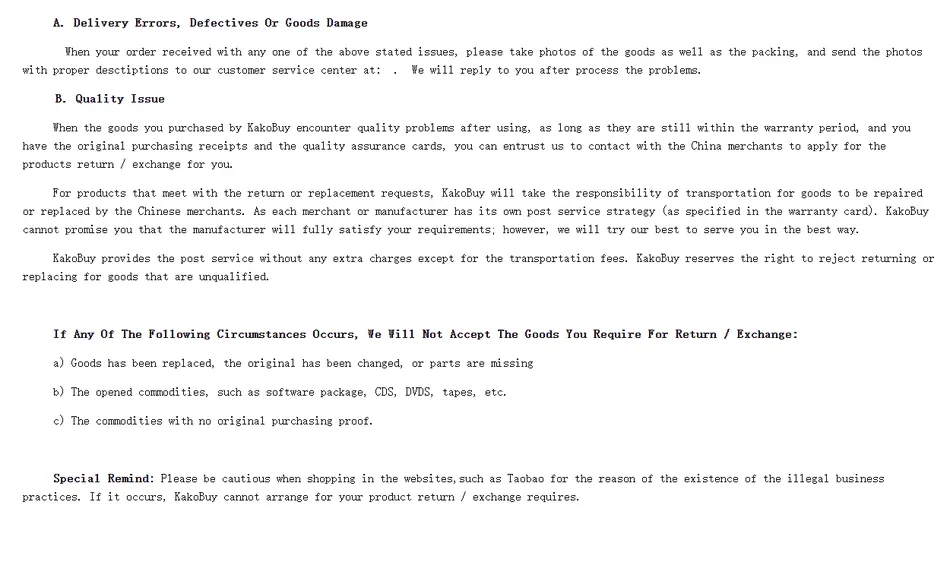
If something still goes wrong
The return policy page sets the shape of after-sales: document the problem with photos of goods and packaging, raise it through support, and expect different handling for delivery errors, defects and quality complaints. The windows are warehouse-anchored, which is the recurring theme of this site's timing advice: the useful moment to act is while your items are still in storage. After international dispatch, options narrow to what the policy page describes, and nothing about a coupon changes any of it.